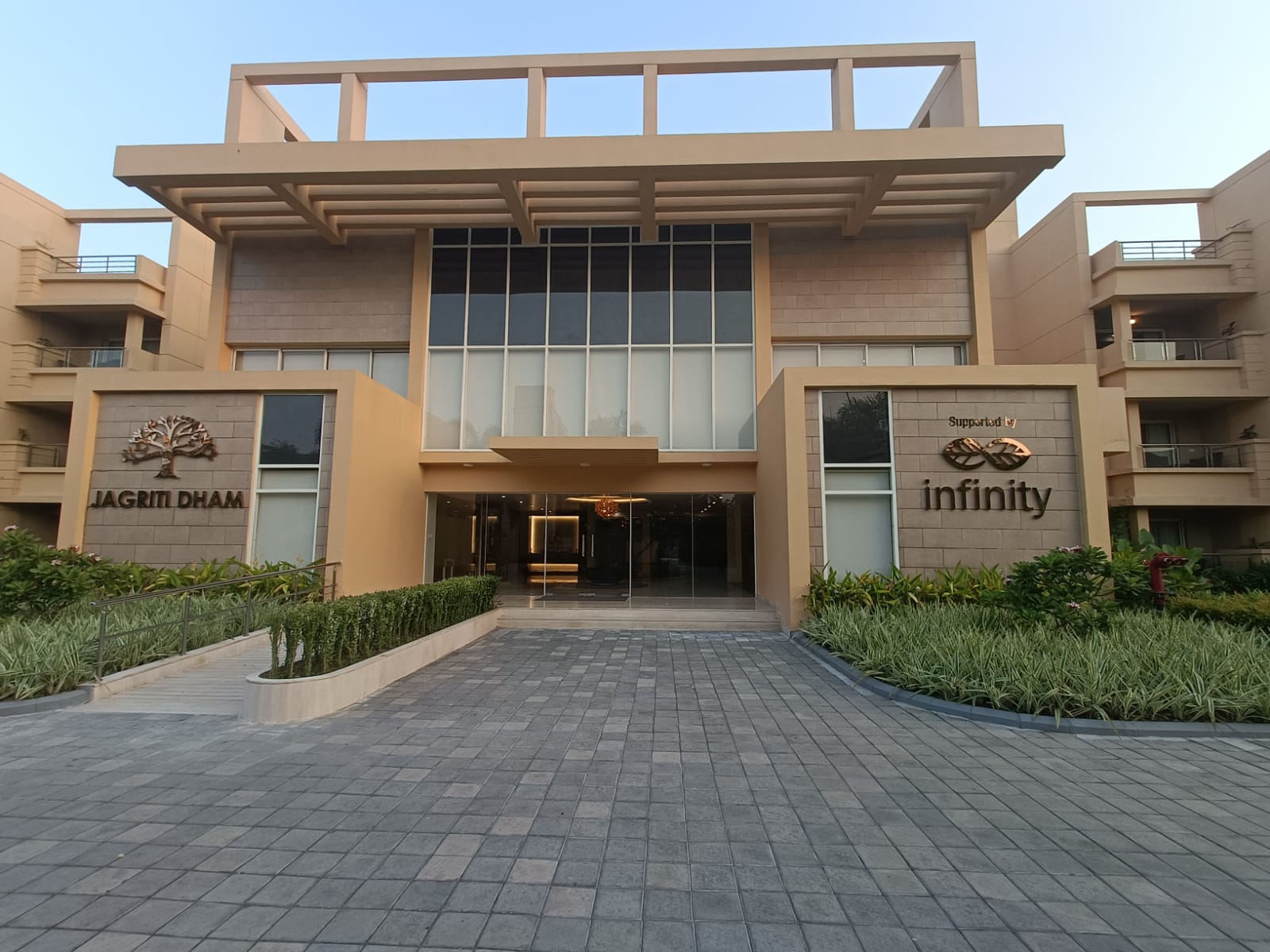
When comparing the Senior Citizen Savings Scheme against standard bank fixed deposits for Indian seniors, SCSS is compared across five criteria that matter most to older adults: interest rate (8.2 per cent annually vs typical senior FD rates of 7 to 7.5 per cent), Section 80C tax deduction on principal, sovereign government backing vs DICGC-insured bank risk, quarterly payout vs typically annual or on-maturity FD interest, and longer tenure certainty. Senior luxury living at Jagriti Dham by Infinity Group near Joka, Amtala helps every resident choose the right instrument for their savings profile — and most residents with eligible savings are guided toward SCSS as their primary fixed-income vehicle.
The choice between the Senior Citizen Savings Scheme and a standard bank fixed deposit is one of the most common financial questions for retired seniors in India — and the answer is not the same for every senior. Understanding the specific differences between the two instruments on the criteria that matter most to older adults produces a clear decision for the majority of situations. The administrative team at the best senior luxury living facility like Jagriti Dham near Joka helps every resident make this comparison specific to their savings amount and income needs — and then opens the right account on their behalf.
What Are the Five Criteria That Matter Most to Senior Citizens When Comparing SCSS vs Fixed Deposits — Interest Rate, Tax Treatment, Safety, Payout Frequency, and Tenure Certainty?
The five criteria below most directly affect the older adult’s experience of each instrument — and on each one, the comparison produces a clear result:
- Interest rate: SCSS at 8.2 per cent outperforms standard senior FD rates. The SCSS rate of 8.2 per cent per annum is typically one to one-and-a-half percentage points higher than senior citizen FD rates at most public sector banks — generally 7 to 7.5 per cent for comparable tenures. On Rs 20 lakh, this difference produces approximately Rs 14,000 to Rs 20,000 more in annual interest income from SCSS. The geriatric care home financial planning team at Jagriti Dham calculates this specific difference for each resident’s deposit amount.
- Tax treatment: SCSS provides a Section 80C deduction that FDs do not. The principal amount invested in SCSS qualifies for a Section 80C deduction of up to Rs 1.5 lakh — reducing the net effective investment cost and improving the post-tax return. Standard bank FDs do not provide a Section 80C deduction on the principal (tax-saving FDs exist but with a five-year lock-in and no quarterly payout). The homes for seniors financial guidance at Jagriti Dham includes Section 80C optimisation for every resident — ensuring that the tax deduction is claimed correctly and that the resident’s effective return is maximised.
- Safety: SCSS has sovereign government backing; bank FDs carry DICGC-insured bank risk. The SCSS is a central government scheme — the interest and principal are backed by sovereign guarantee with no credit risk. Bank FDs are insured by DICGC up to Rs 5 lakh per depositor per bank — meaning that deposits above this threshold carry the credit risk of the bank. For seniors depositing the maximum Rs 30 lakh, the safety advantage of SCSS is significant. The houses for seniors planning guidance at Jagriti Dham always highlight this safety difference for residents considering large fixed-income deposits.
- Payout frequency: SCSS quarterly interest vs FD annual or on-maturity payouts. SCSS pays interest quarterly — in April, July, October, and January — producing four predictable income events per year. Standard bank FDs typically pay annually or at maturity, making the income less useful for regular expense planning. The housing for elderly people financial planning at Jagriti Dham aligns residents’ expenses with SCSS quarterly receipt dates so that the income is used most effectively.
- Tenure certainty: SCSS locks in the rate for five years; FD rates vary at renewal. The SCSS rate is locked at opening for the full five-year tenure — extendable by three years at the rate applicable at the extension date. Bank FD rates are reset at each renewal and can be meaningfully lower when market rates fall. The housing for old people rate-lock advantage of SCSS provides five years of income certainty — a significant planning benefit for seniors on fixed budgets.
When a Fixed Deposit Makes More Sense Than SCSS — and How Senior Luxury Living at Jagriti Dham Helps Residents Choose the Right Instrument for Their Specific Profile
SCSS wins the comparison for most senior citizens — but three specific situations make a bank FD the more appropriate instrument:
- When the senior needs liquidity before five years. The SCSS has a five-year lock-in — premature withdrawal is possible but carries a penalty. For a senior who may need to access a large amount within one to three years, a bank FD with a shorter tenure or a liquid FD product is more appropriate. The information about old age home financial planning at Jagriti Dham assesses liquidity needs before recommending SCSS — and where near-term access is needed, a shorter-tenure FD is recommended for that portion of the savings.
- When the deposit amount exceeds the Rs 30 lakh SCSS maximum. The SCSS maximum deposit is Rs 30 lakh — seniors with larger savings amounts need to place the excess in another instrument. For this excess, a senior citizen FD at the highest available bank rate — with DICGC insurance coverage across multiple banks to manage the credit risk — is the most productive option. The old age home facilities financial guidance at Jagriti Dham helps residents with larger savings design a combined SCSS-plus-FD strategy that maximises total return across the full savings amount. Families can review this at the homes for seniors listing — where the full financial guidance standard at Jagriti Dham is described.
- When a combination of SCSS and FD provides the best total income and liquidity profile. The most financially productive strategy for many senior residents at Jagriti Dham is a combination — the maximum Rs 30 lakh in SCSS for the highest rate and sovereign safety and additional savings in a short-tenure FD for liquidity. This combination provides both the highest available fixed income on the core savings and the flexibility to meet unexpected large expenses from the FD without touching the SCSS. The old age home facilities planning team at Jagriti Dham designs this combined strategy for residents whose savings profile makes it the most productive approach — and manages both account openings on the resident’s behalf.
For Most Senior Citizens in India With Eligible Savings, SCSS Is the Better Instrument — and Jagriti Dham Helps Every Resident Confirm and Act on That Choice
SCSS outperforms standard bank FDs on four of five criteria for most retired seniors in India — higher rate, Section 80C deduction, sovereign safety, and quarterly payout. The right choice depends on liquidity needs and savings amount. Choosing the best senior luxury living facility at Jagriti Dham by Infinity Group near Joka, Amtala, includes access to an administrative team that makes this specific comparison for each resident’s savings profile and opens the right account — or combination of accounts — on their behalf.
Frequently Asked Questions
Q1. For a senior with Rs 40 lakh in savings, how should the Rs 30 lakh SCSS maximum and the remaining Rs 10 lakh be allocated for the best combination of return, safety, and liquidity?
The optimal allocation places Rs 30 lakh in SCSS — capturing the 8.2 per cent rate and sovereign safety on the maximum eligible amount. The remaining Rs 10 lakh is most productively placed in a one-year or two-year senior citizen FD at the highest available bank rate — with DICGC insurance fully protecting this amount. The shorter FD tenure provides the liquidity that the five-year SCSS does not, and at renewal the FD rate can be compared again. The Jagriti Dham team manages both account openings and coordinates the FD renewal timing with the family.
Q2. For a senior who already holds a bank FD that is approaching maturity, how does Jagriti Dham advise on whether to roll it into SCSS or renew the FD?
The renewal advice depends on three factors the Jagriti Dham team assesses at maturity. First, SCSS eligibility—if the resident has not yet invested the maximum Rs 30 lakh, rolling the FD proceeds into SCSS captures the rate advantage and Section 80C deduction. Second, liquidity needs — if a significant expense is foreseeable within two years, the FD’s shorter renewable tenure is more appropriate. Third, the available bank FD rate at maturity — if it has risen significantly above the current SCSS rate, the FD may be more productive for the surplus.
Want to find out whether SCSS or FD is right for your parent at Jagriti Dham near Joka?
Book a scheduled visit — the administrative team will compare both options for their specific savings profile.
About Jagriti Dham
This guide was curated by the Jagriti Dham team (www.jagritidham.com). Jagriti Dham is Kolkata’s most luxurious senior citizen home and Eastern India’s first Indian Green Building Council-certified green senior living facility, situated near Joka, Amtala in South Kolkata. A project of the Infinity Group, Jagriti Dham is envisioned as a centre of excellence, promoting active ageing and aiming to build an age-integrated society — where elders can live independently while receiving the best possible care. Unlike other old age homes, Jagriti Dham’s vision extends beyond the walls, giving elders a hassle-free life in a peaceful, like-minded community.
Follow us: Facebook | YouTube | Google My Business | LinkedIn | Instagram